5 signs it’s time to replace your roof
What each warning sign means on a South Florida roof, and how to tell when a repair is still enough.
 PSR Roofing Company · · 2 min read
Your roof protects everything under it, but South Florida sun, salt air and hurricane season wear it out faster than the brochure says. These are the five signs we look for when a homeowner asks whether it is time.
1. Cracked, curling or missing shingles and tiles
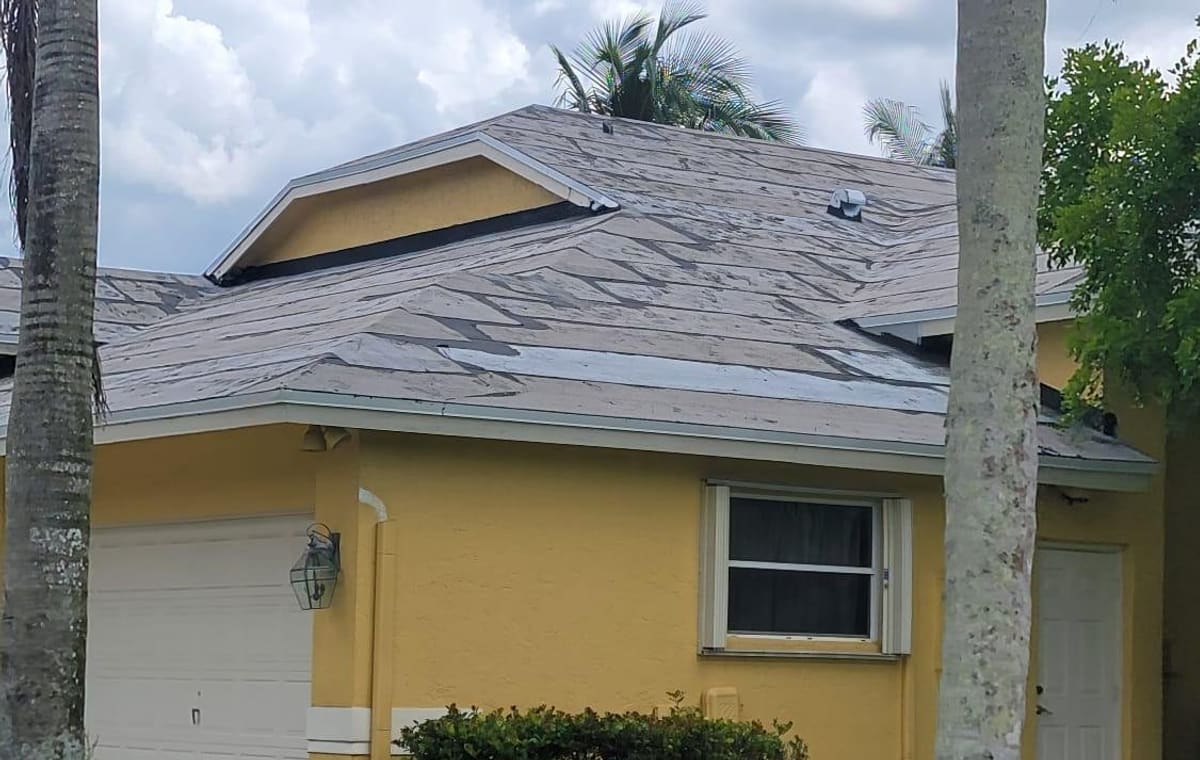
Shingles that are cracked, curling at the edges or missing altogether mean the roof is losing its outer layer. On a tile roof, look for cracked, slipped or missing tiles, especially along the ridges and edges, where the wind gets the most grip. One or two is a repair. A pattern across the whole roof means the system is wearing out.
2. Water stains, leaks or mold in the attic
Brown rings on a ceiling, peeling paint near the roofline or a musty attic all point to water getting in. Water runs along the deck before it drips, so the stain is rarely right under the leak. Left alone, a leak rots the decking and invites mold, which costs more to fix than the roof.
3. A sagging roofline or soft spots
A roofline that dips, or spots that feel soft underfoot, usually mean the decking has been wet for a long time. That is a structural problem, not a cosmetic one, and it is the one sign that should never wait.
4. The roof’s age
Age matters more here than up north. Many Florida insurers also ask for a roof inspection, or a newer roof, once a shingle roof passes about 15 years. Roughly what to expect in South Florida:
- Architectural shingle
- 15–20 years
- Concrete or clay tile
- Tiles last; the underlayment beneath them usually needs replacing at 20–25 years
- Standing-seam metal
- 40+ years with maintenance
- Flat (TPO, modified bitumen)
- 15–20 years
5. Rising power bills and hot upstairs rooms
A damaged or poorly ventilated roof lets heat in and cool air out. If your electric bill climbs year after year and the upstairs never cools down, the roof and attic ventilation are worth a look.
Florida’s 25% rule. If more than a quarter of a roof section needs repair within 12 months, the building code can require replacing that whole section to current code. Roofs built to the 2007 Florida Building Code or later are exempt. We’ll tell you which applies to your roof at the inspection.
Repair or replace?
If the damage is limited to one area and the rest of the roof has years left, a repair is the right call, and we’ll say so. If you’re seeing two or more of these signs, the roof is near the end of its life, or a repair would trigger the 25% rule, replacement is usually the better spend.
What a free inspection tells you
We get on the roof, photograph what we find and walk you through it, with a written estimate if work is needed. If storm damage is part of the picture, we document it for your insurance claim. The inspection is free.
Written by PSR Roofing CompanyLicensed and insured roofers serving Miami-Dade, Broward, Palm Beach, Collier and Lee counties. 1811 NE 142nd St, Miami.